A ransomware attack on a NAS
A NAS commonly holds shared business data, accounting records, projects, images, video, databases, virtual machines and backups. With so much data concentrated in one place, compromise of an account with write access or direct ransomware access to shares can cause extensive impact quickly. For encrypted NAS data recovery, the first step is to preserve the current state and assess the actual data.
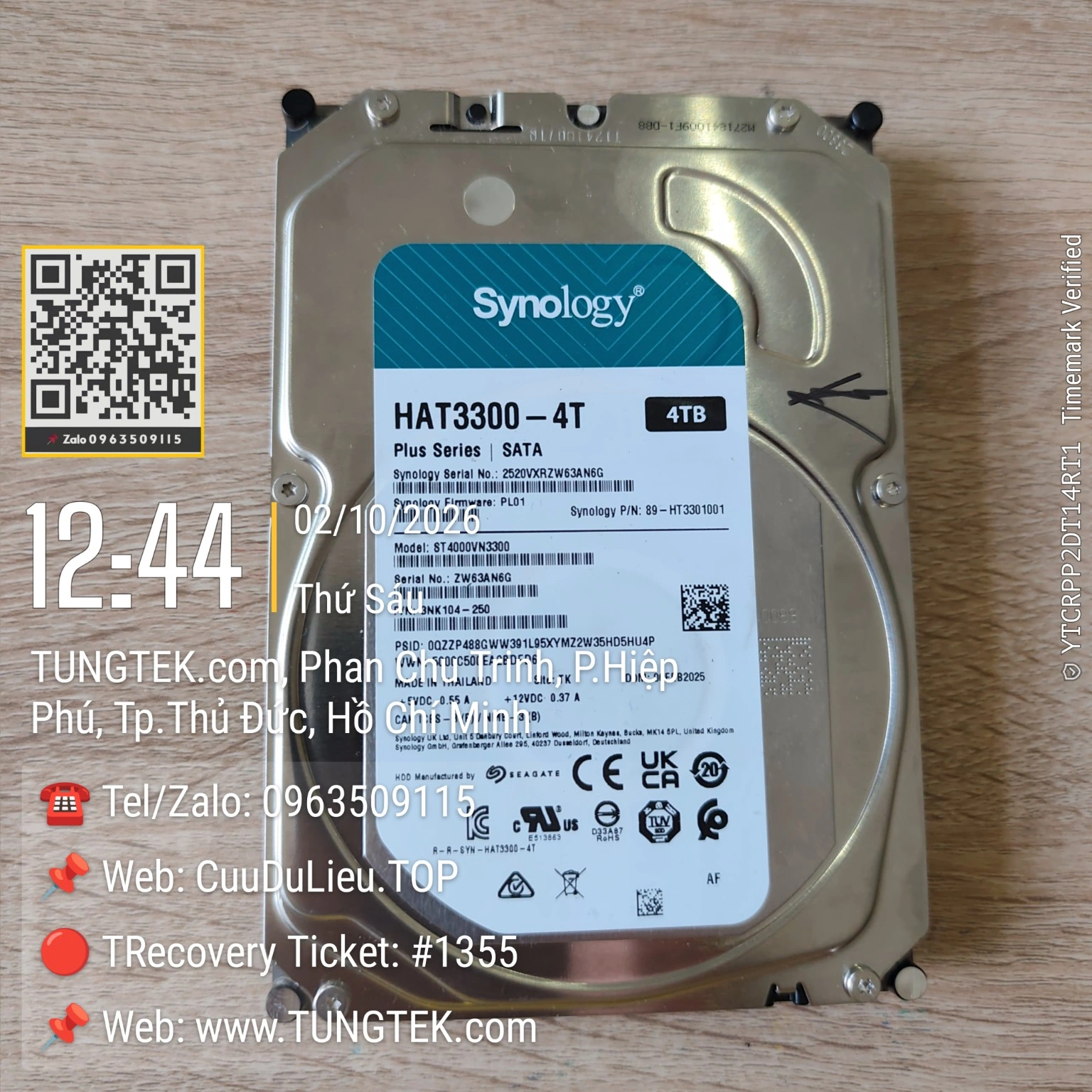
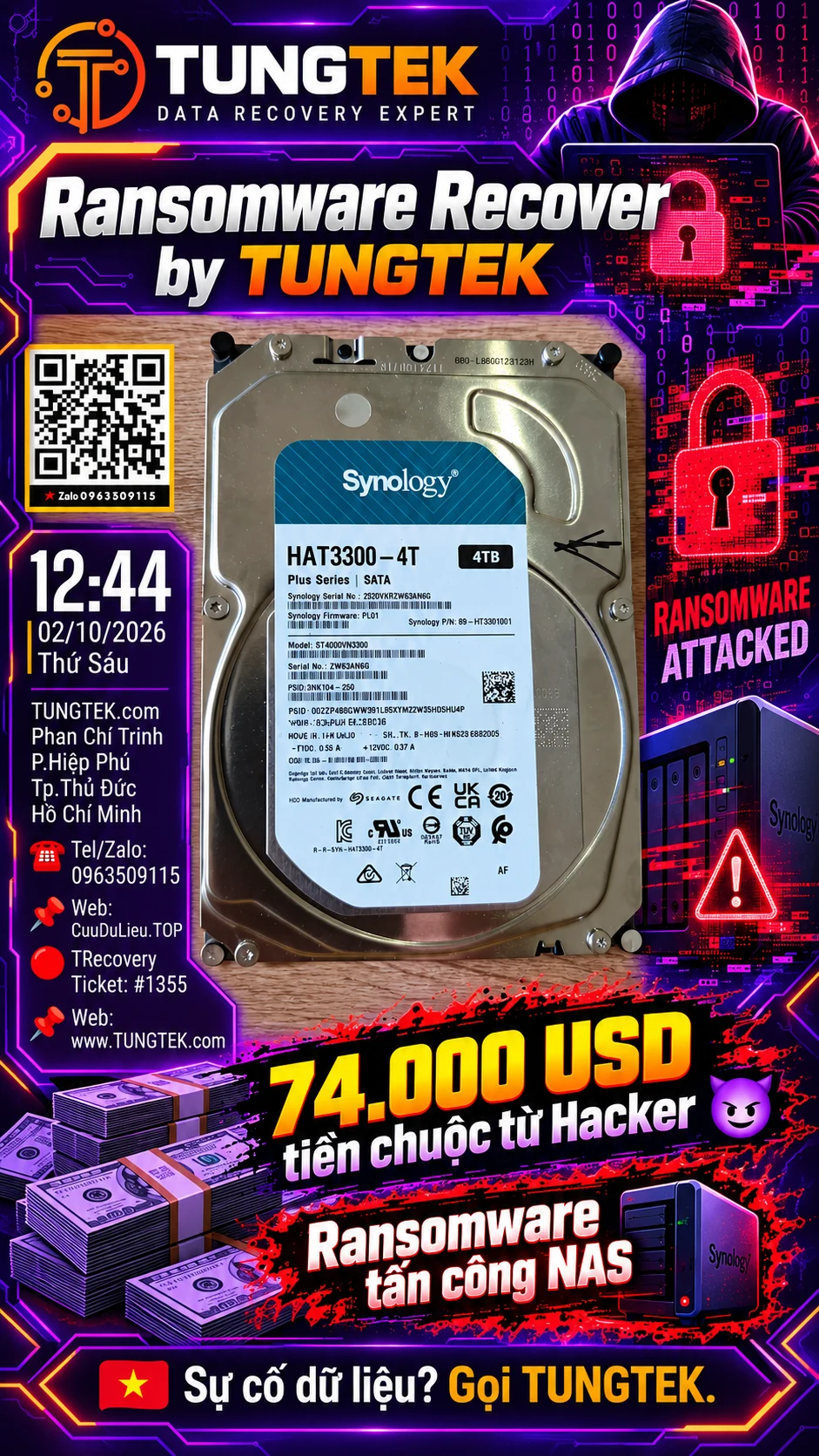
In Ticket #1355, TUNGTEK received hard drives from the NAS system for examination. The recorded drive model was Synology HAT3300-4T – 4TB – SATA.
At intake, one of the most striking details was the ransom demanded by the attackers:
This figure puts significant pressure on a business, but a ransom demand is not a technical measure of recovery prospects. The first questions are how ransomware affected the data, which portions remain intact and whether an independent technical recovery path remains.
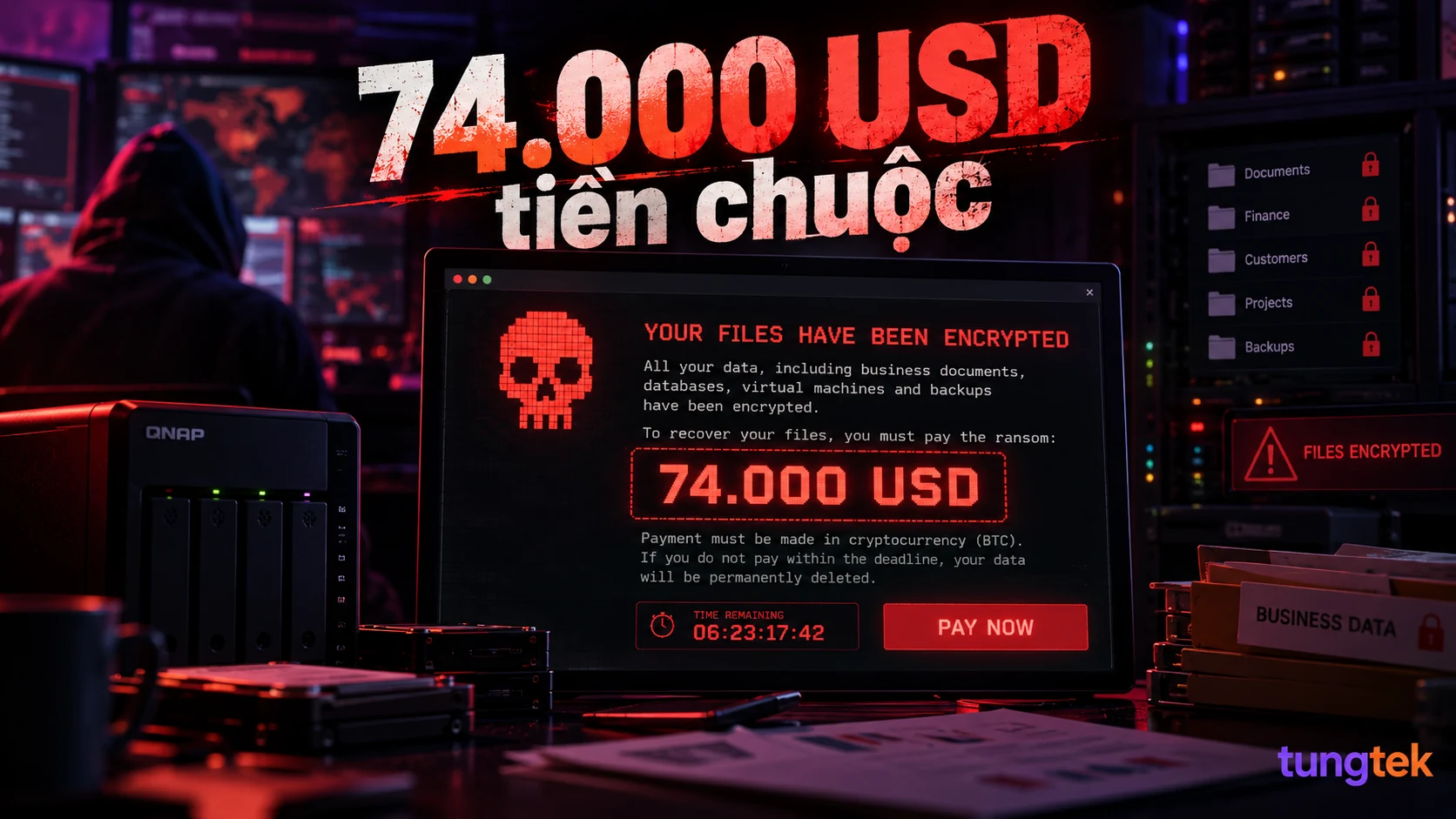
USD 74,000 is not the “price of the data”
Ransom demands usually reflect what attackers believe a victim can or must pay, rather than the actual technical cost of recovery. Attackers may estimate an organization’s size from its domain, databases, virtual machines, ERP, accounting files, Active Directory, backups or other internal data they can see.
Before any decision about negotiation or payment, a business should obtain an independent technical assessment of the affected data itself.
What does TUNGTEK examine first?
1. Encryption scope
- How many folders and files were affected.
- Which files have changed extensions and which remain intact.
- Whether files were encrypted fully or partially.
- Whether data was deleted or overwritten.
2. Storage layer
- RAID, volumes and partitions: the basis for assessing RAID/NAS recovery and NAS & RAID services.
- Filesystem and metadata.
- Snapshots, journals and older blocks.
- Prospects for reconstructing data from lower storage layers.
3. Encrypted file samples
- Header, footer, signature.
- Entropy and encryption patterns.
- Intact data regions.
- Extensions, ransom notes and associated IOCs.
4. Recovery opportunities
- Extracting data that was not encrypted.
- Filesystem forensic.
- File carving / reconstruction.
- Remaining backups, snapshots or other copies.
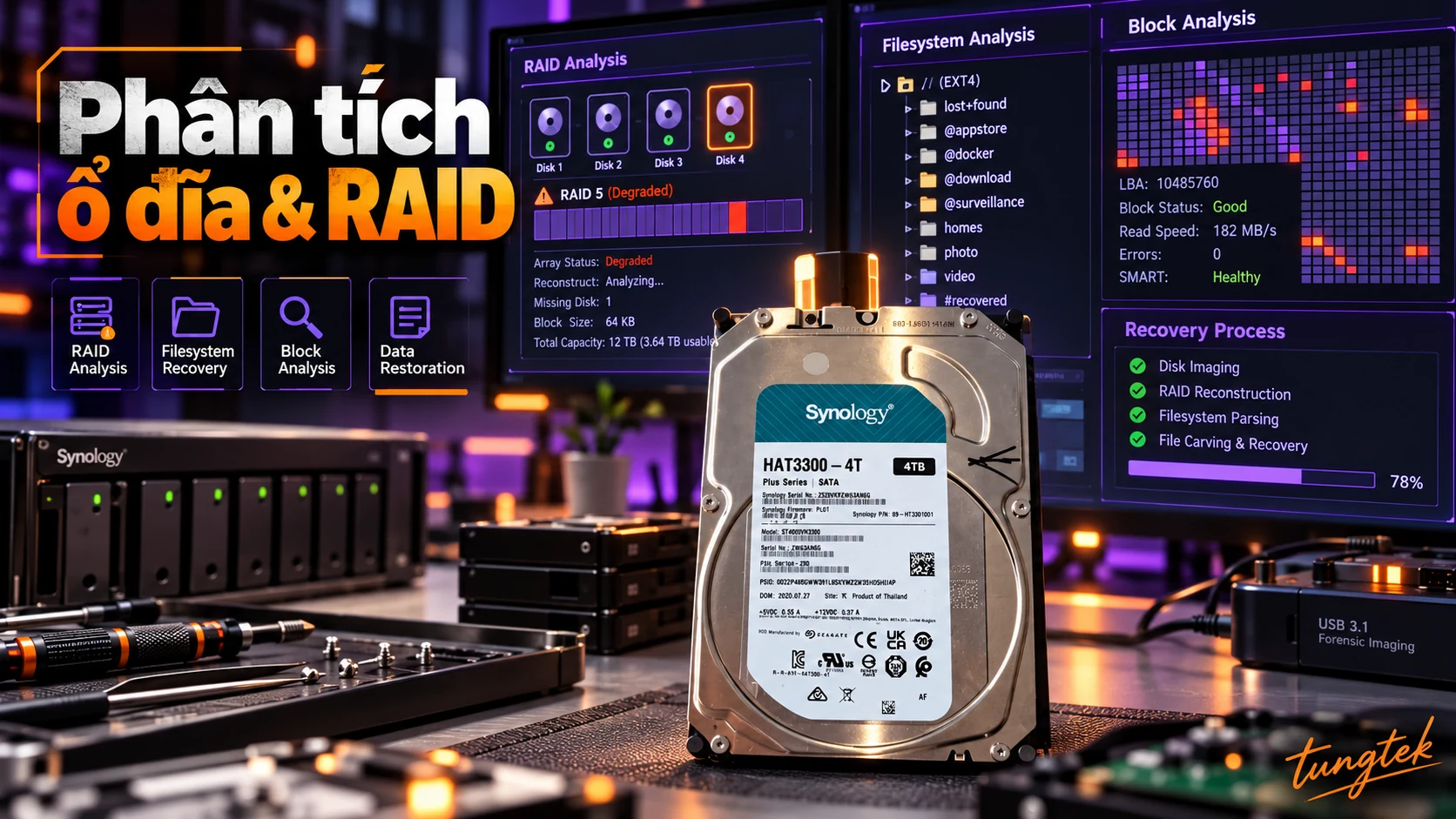
In a ransomware incident, preservation must precede any recovery operation.
Ransomware is not all the same
Two files both described as “encrypted by ransomware” may have very different recovery prospects. Some variants encrypt only headers or selected blocks; others encrypt at intervals; large files may retain substantial unaffected regions. Conversely, full-file encryption with a strong algorithm, a unique key and no implementation weakness can make file-level recovery extremely difficult.
For large files such as MDF, LDF, VHDX, VMDK, PST, ZIP, databases or video, internal structure and the ransomware’s block processing can directly shape the recovery strategy. This is why TUNGTEK uses RFC – Ransomware Fast Check to assess samples before processing the whole system.
Avoid rushing to format or rebuild a NAS
Actions that seem reasonable after an incident can reduce recovery prospects if they write more data to the source device. Avoid broad changes before a clone/image and clear forensic plan are established.
- Formatting volumes or reinitializing drives.
- Uncontrolled RAID rebuilds.
- Resetting the NAS or updating firmware without a need.
- Copying new data to the affected volume.
- Reinstalling the operating system on the same storage.
- Deleting encrypted files or running multiple recovery tools directly on source drives.
Paying a ransom is not the first step
Ransomware creates pressure through countdowns, threats to increase the demand, delete keys or publish data. From a data recovery perspective, the first step is to determine whether an independent technical path to recover data remains.
TUNGTEK does not treat ransom payment as the default recovery approach. The priority remains analysis of data, RAID, filesystems, ransomware, backups, snapshots and surviving blocks.
Ticket #1355 is approached as a forensic case
For Ticket #1355, the USD 74,000 demand is only one part of the story. The technical team’s priority is to establish how much actual data remains on the drives, the state of the RAID/filesystem and the appropriate encrypted data extraction approach.
A NAS ransomware case may involve several layers at once: Cybersecurity + RAID Recovery + Filesystem Forensics + Data Recovery + Ransomware Analysis. The interaction of these technical layers determines the actual recovery opportunities.
A key lesson: a NAS is not a backup
RAID helps maintain availability when the permitted number of drives fail, but does not protect against an authorized account overwriting, deleting or encrypting files. An online NAS accessible through the same permission system can remain within ransomware’s reach.
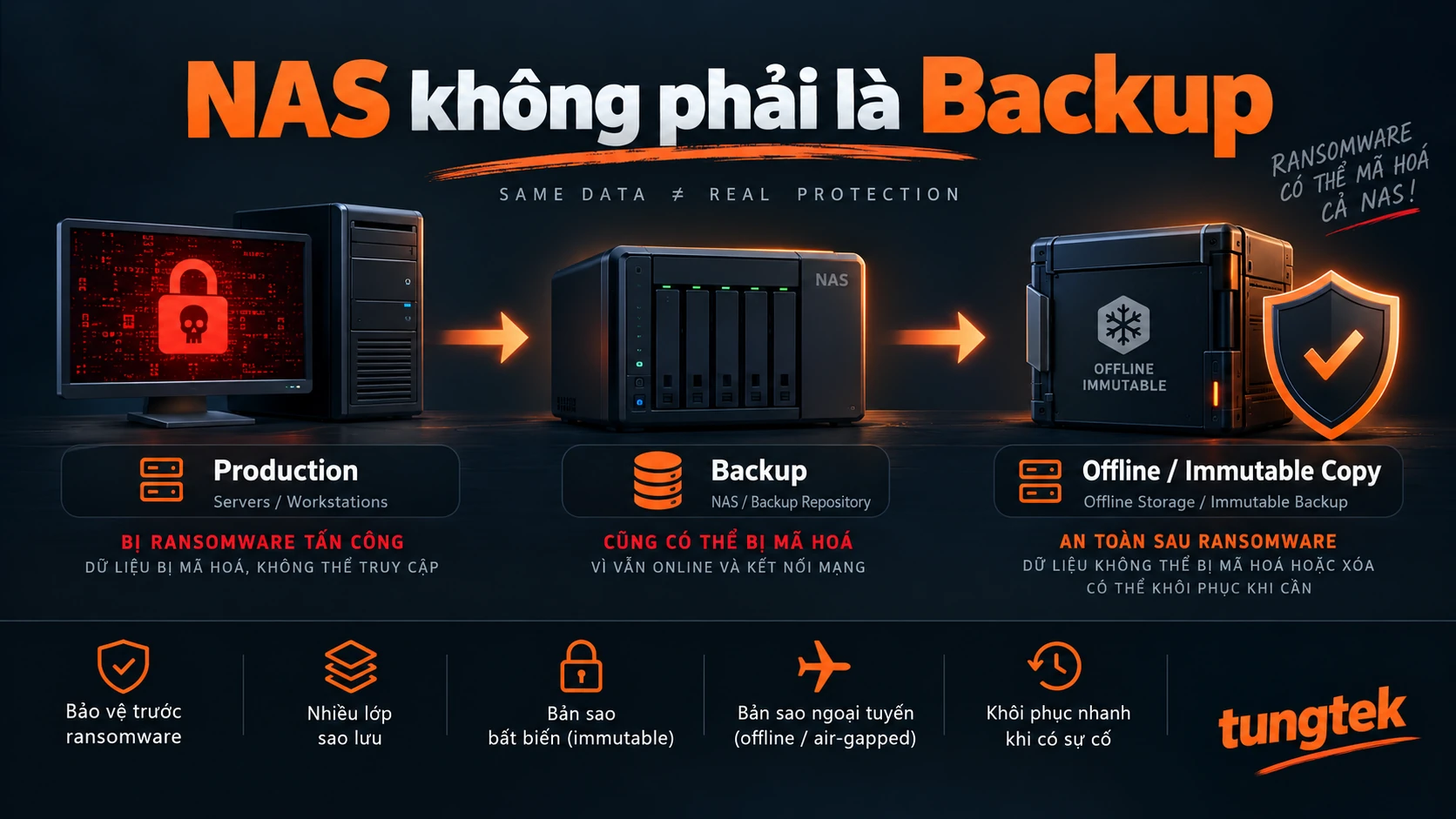
For important data, a safer model uses multiple backup layers and at least one offline, air-gapped or immutable copy. Businesses should also periodically test actual restoration, rather than relying solely on a “Backup Successful” status.
Communication artwork for Case #1355
TUNGTEK accepts NAS / Server / RAID / Hyper-V / VMware / SQL / File Server / Ransomware cases and business data.
RFC – Ransomware Fast Check: assesses data samples before recovery work across the entire system.
📣 Zalo/Hotline: 0963 509 115
🌐 CuuDuLieuMaHoa.com
🌐 CuuDuLieu.TOP
🌐 TUNGTEK.com
Send details for an RFC assessmentContact TUNGTEK
Technical findings may change when more samples, IOCs or forensic results become available. This article does not attribute a ransomware family without sufficient evidence.