01 / CASE CONTEXT
When a business NAS encounters .encrypt
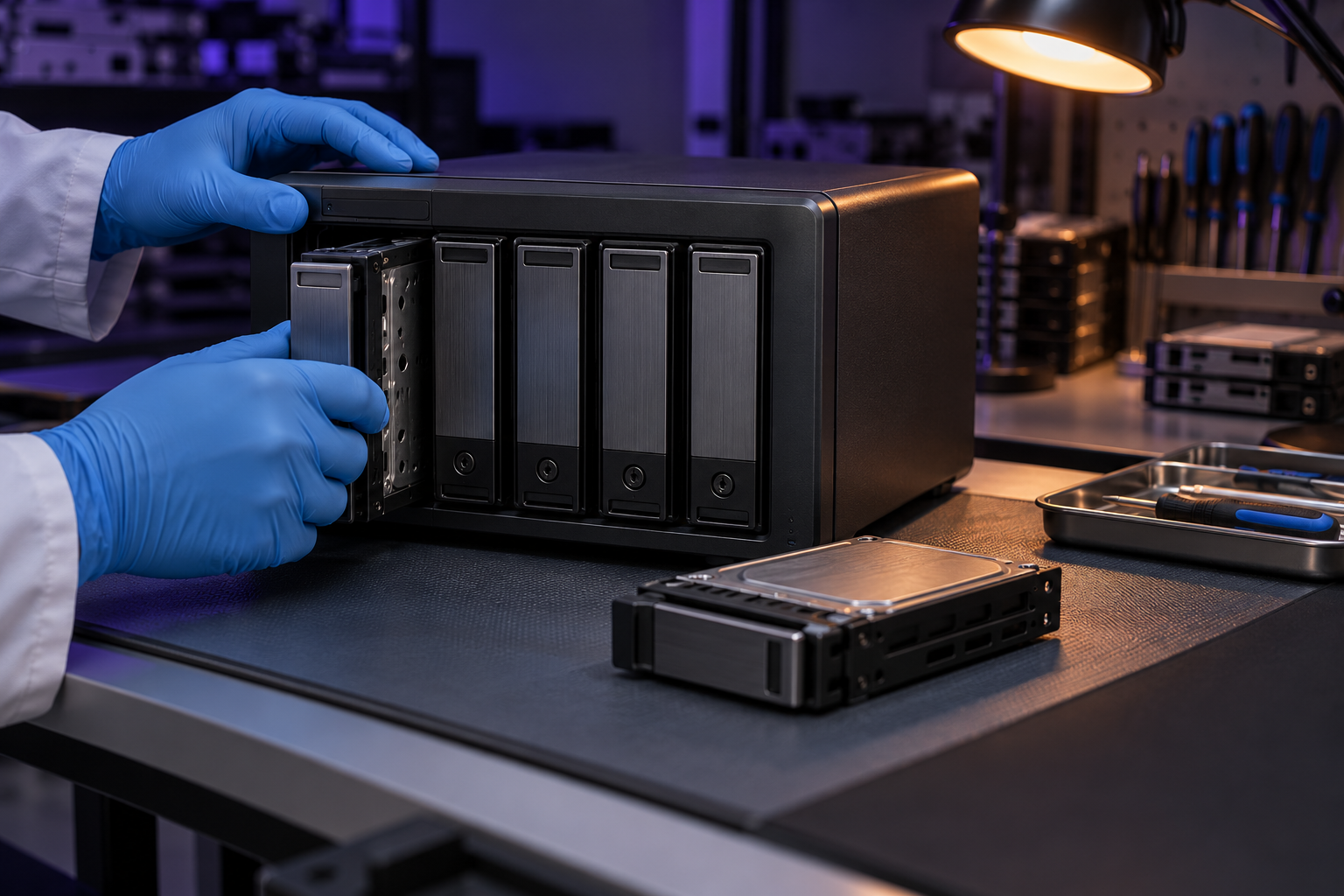
The customer in this case was a major car dealership in Northern Vietnam, whose NAS was affected by ransomware, with files carrying the extension .encrypt. The company name, car brand and internal details remain confidential.
- Customer
- Major car dealership · Northern Vietnam
- Affected system
- NAS storage device
- Data indicators
- Files carrying the extension
.encrypt - Handling team
- TEKLab · TUNGTEK
For business data, identifying which documents are needed first, which departments must verify them and what conditions allow a return to operational use is essential to the response. Priorities should be agreed with the customer during intake.
.encrypt cases previously handled by TUNGTEK at TEKLab
Intake and analysis experience helps guide examination. Extraction prospects for each new case still depend on its samples and the current state of the specific NAS.
The public scope of this article covers case context and assessment methods. It does not publish extraction percentages, delivered data volumes or acceptance results for individual cases.
02 / ASSESSMENT AT TEKLab
Assessing a NAS from storage structure to usable data
The extension .encrypt is an initial indicator for classifying samples. Identifying the ransomware family, intrusion path or response requires additional evidence such as the ransom note, file samples and relevant logs.
Current drive, pool and volume condition
Record the drive count, bay order, RAID configuration where applicable and storage condition. If drives have also failed or structures are damaged, examination must include the underlying storage beneath the encrypted files.
Impact on each file type
Select representative samples of the data the customer actually needs. Examine structure, altered regions and readability in the appropriate software; a surviving filename and size do not establish that the content is usable.
Snapshots and backups, if accessible
Review the timestamps, integrity and data scope of remaining copies. Any restoration approach must be tested in an appropriate environment before returning to production.
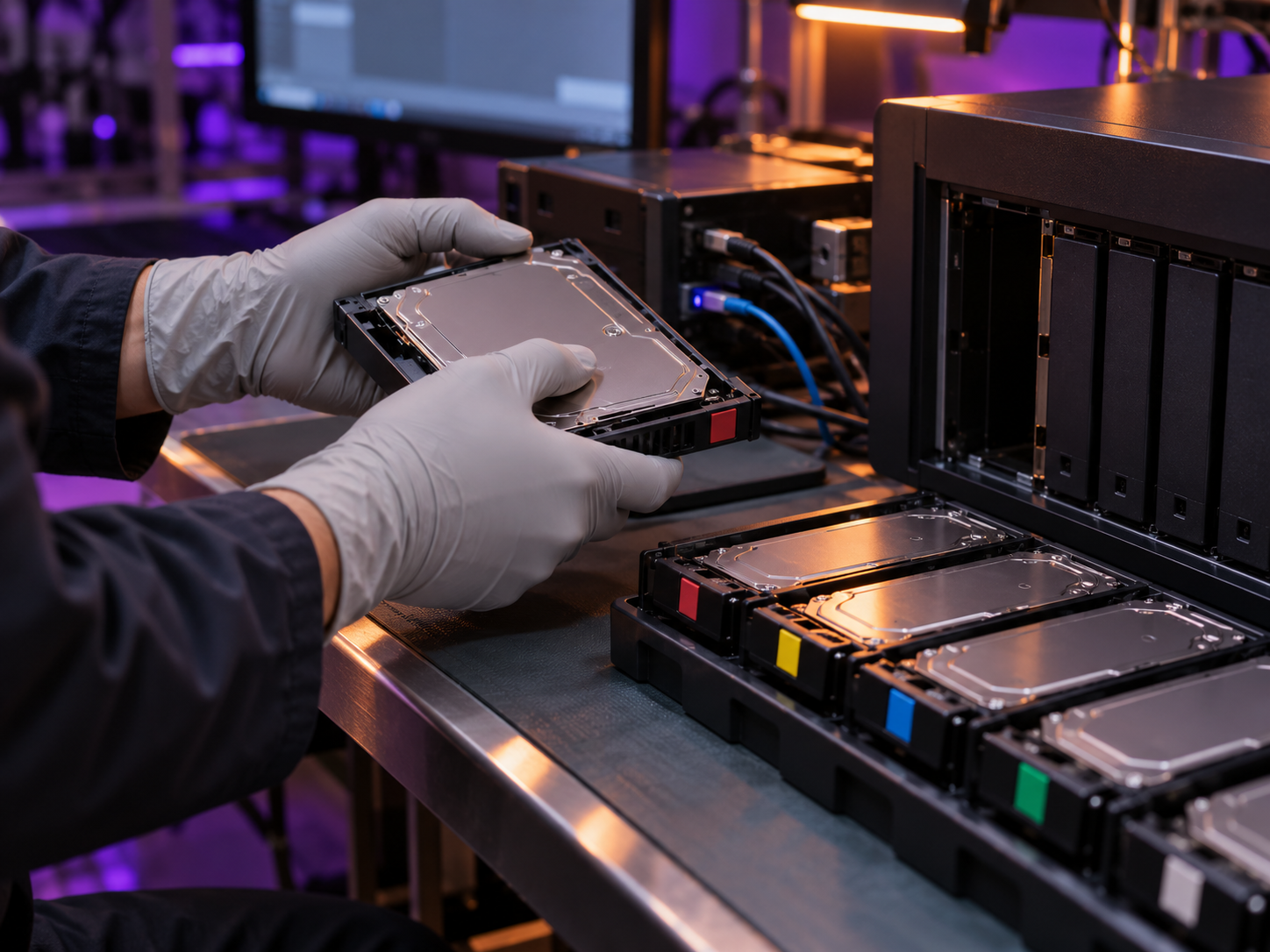
Required findings: the examined current state, priority data, sample extraction prospects, risks and a proposed approach. Scope and acceptance criteria are discussed before implementation.
Explore TUNGTEK’s free RFC to prepare the relevant details and samples.
03 / DATA VERIFICATION
Acceptance criteria tied to the customer’s work
The aim is data usable for the agreed business needs. For each data group, TEKLab and the customer should establish verification methods before handover:
- Documents: open them in the appropriate application and inspect the content and priority files.
- Databases or backups, where in scope: test loading or restoration in a verification environment, together with IT or the software provider.
- Handover inventory: check the agreed scope, record usable files and outstanding exceptions.
- Customer confirmation: accept the results based on the actual data and agreed criteria.

Pay only for usable data.
04 / INCIDENT DISCOVERY
.encrypt files on a NAS: prioritize preservation
- 01
Isolate affected devices
Coordinate with IT to disconnect the NAS and related devices from the network to limit spread. Both CISA and Synology recommend identifying and promptly isolating affected systems.
- 02
Keep evidence and representative samples
Preserve the ransom note, some encrypted files, corresponding originals where available, discovery time and relevant logs. Technical imaging should be performed by a qualified person.
- 03
Minimize changes to the original data
Avoid reinitializing the NAS, recreating pools, formatting or running batch tools before a preservation plan is established. Record bay order before removing drives and tell the technician which actions have already been taken.
- 04
Prepare details for RFC
Provide the NAS model, drive count, storage configuration if known, snapshot/backup status and priority data list. TUNGTEK will guide you to a suitable sample submission channel.
Response guidance: CISA #StopRansomware Guide and Synology’s ransomware guidance. These are general references; the customer’s NAS brand and model remain confidential.
05 / FAQ
Questions about NAS .encrypt encryption
Can malware be identified from the .encrypt extension alone?
There is insufficient evidence. File samples, notes and technical traces must be compared. Here, .encrypt describes the file indicator in cases received by TUNGTEK.
After handling four cases, can you immediately estimate a rate for my NAS?
A feasible percentage or scope must be based on RFC of the specific NAS and samples. Drive condition, storage structure, file impact and remaining copies all need examination.
Should I change file extensions back to open the data?
Renaming a file does not reverse encrypted content. Keep original samples for analysis and test only on copies under a technical plan.
Should I send the entire NAS or just a few files?
Discuss the current state first to determine the intake scope. Samples can support initial assessment; if NAS structure or drives need examination, TUNGTEK will explain the appropriate device handover.